A multi-project partnership reimagining Slack as an AI-native work and collaboration platform



1 / 3
Overview
New teams joining Slack face a paradox: they need active channels and conversations to understand Slack's value, but they start with an empty workspace.
Over 50% of teams come with established email conversations and context.
The question became: how do we help them see Slack's potential immediately?
My role - Product Design Lead
Iñaki Soria - Senior Product Designer





Problem
Users transitioning from email don't know where to start in Slack.
They need to manually create channels, figure out who should be in them, and explain why they exist.
This creates friction at the most critical adoption moment, when teams are deciding if Slack is worth the switch from email.
Solution
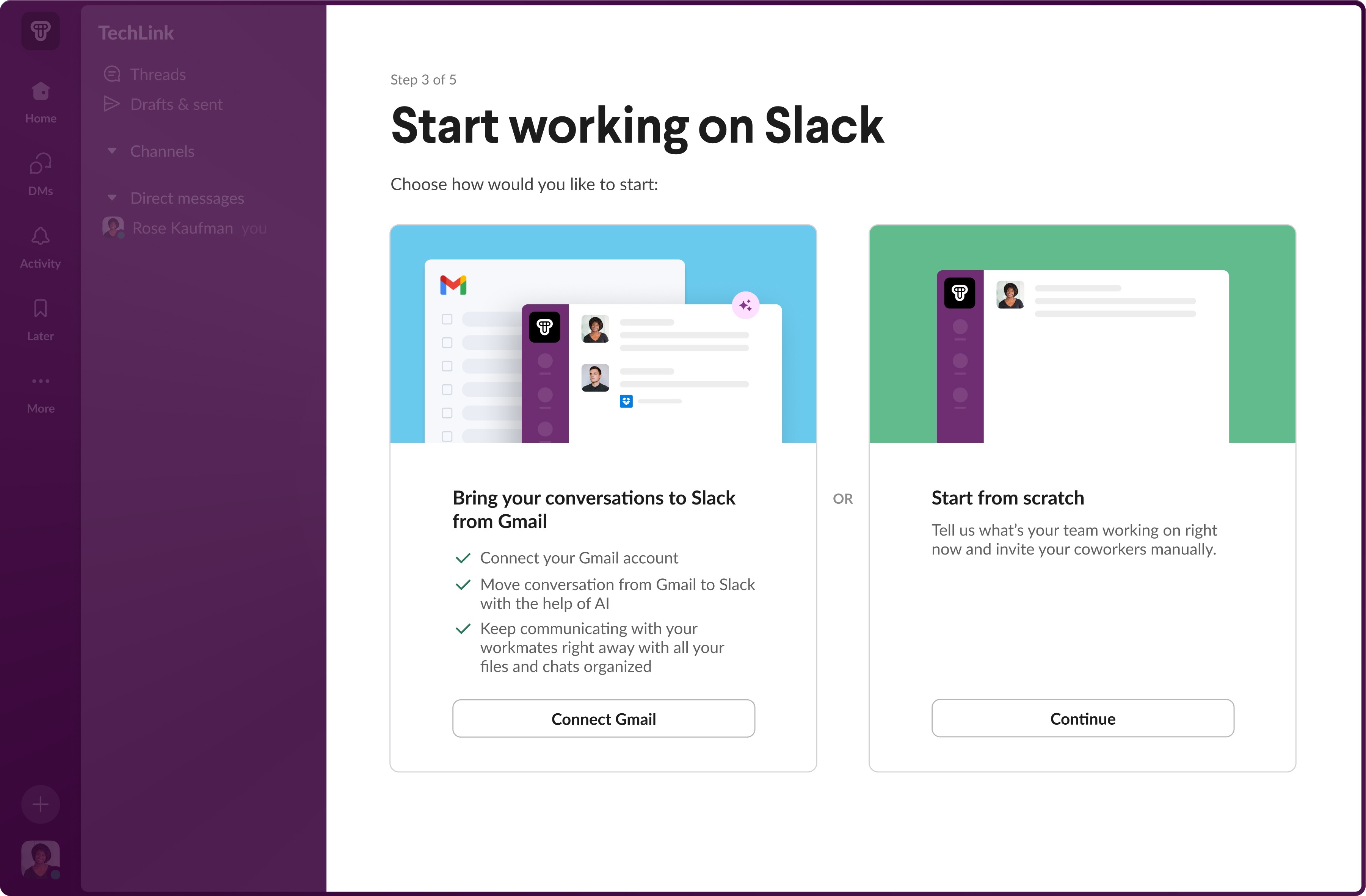
We designed an onboarding experience that analyzes users' recent email activity to automatically create relevant channels, invite the right people, and import context from recent conversations.
New teams see a pre-populated workspace that mirrors their actual work, making Slack's value immediately tangible.
2 / 3
Overview
Users collaborate in Slack to discuss work happening elsewhere—documents, designs, code, presentations.
They constantly copy-paste between apps, screenshot content to share, and explain context that AI could already see.
What if Slack understood what you were working on across your entire desktop?
My role - Product Design Lead
Iñaki Soria - Senior Product Designer
Problem
Slack's AI is blind to users' actual work context.
When someone asks for feedback on a document, they must manually share it.
When they need help with something on screen, they have to describe it.
This creates constant friction between the work surface (desktop apps) and the collaboration surface (Slack).
Solution
We reimagined Slack as an ambient layer that can inspect desktop content, understand context, enable real-time collaboration, and proactively assist across applications.
AI capabilities extend beyond the Slack window—able to see what users are working on, suggest improvements, and enable richer collaboration without manual sharing.
3 / 3
Overview
Knowledge workers need to gather information from multiple sources, synthesize insights, and share findings with teammates.
Tools like NotebookLM excel at personal research, but enterprise work is collaborative.
Users need research capabilities that seamlessly transition from individual investigation to team collaboration.
My role - Product Design Lead
George Kvasnikov, Shruti Agrawal - Product Designer



Problem
Enterprise research is fragmented across tools.
Users investigate topics individually in research apps, then recreate their findings in documents or presentations to share with teammates.
They lose context in translation and can't easily invite collaborators into their research process without starting over.
Solution
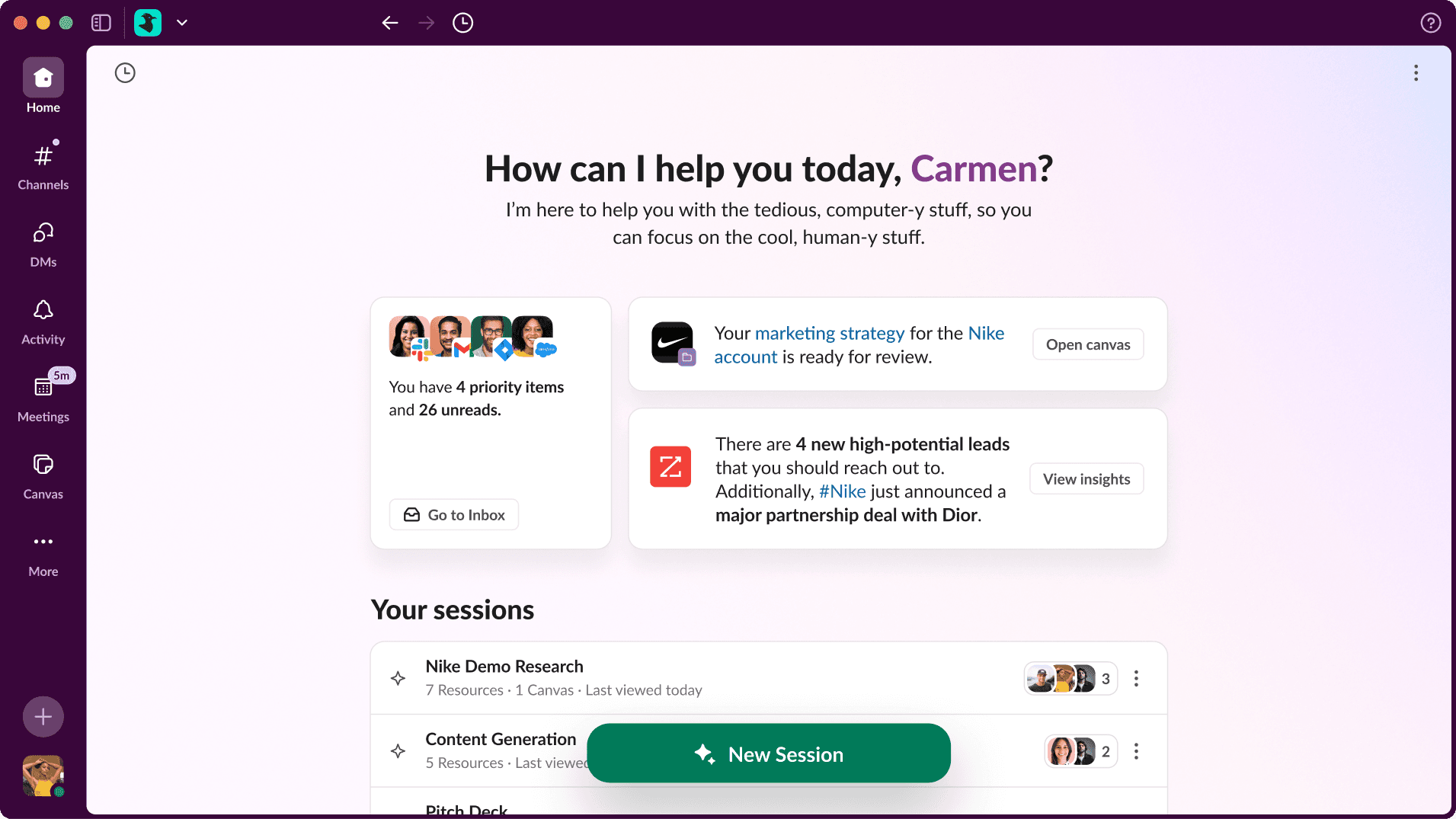
We designed a multi-turn research experience within Slack that orchestrates specialized AI agents to gather and synthesize information.
Personal research naturally becomes collaborative—teammates can jump into the research canvas, see the sources and synthesis, and continue the investigation together.